 Login



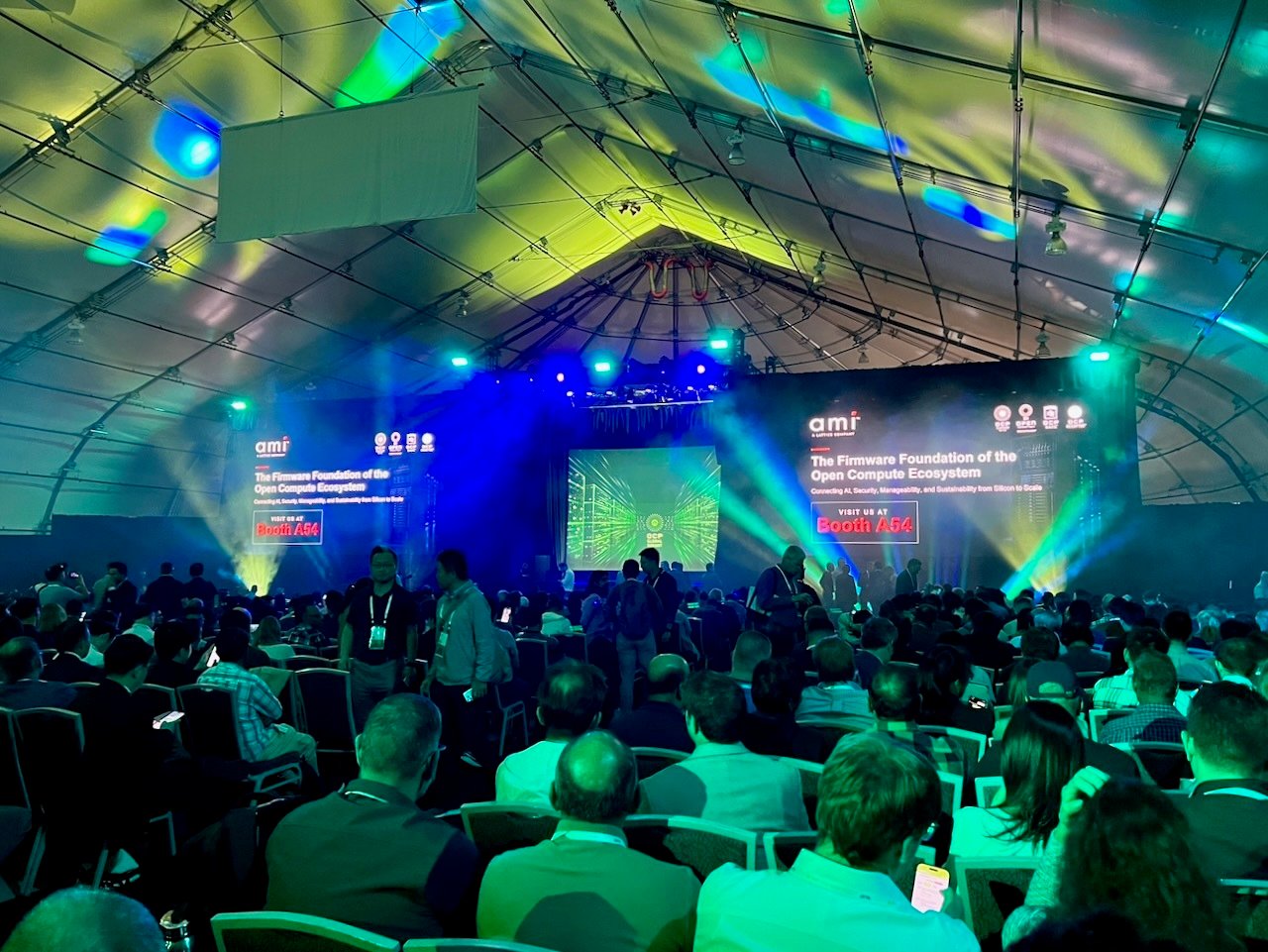
The global race to build artificial intelligence infrastructure is in full swing, reshaping data centers and digital architecture. Billions of dollars are flowing into high-performance networking, advanced computing hardware, robust power systems, and specialized cooling technologies to meet unprecedented demand for AI processing. This massive physical buildout was front and center at the 2026 OCP Global Summit in San Jose, California, where industry leaders converged under the theme of scaling innovation for the AI era. While the energy at the event was palpable, the discourse also revealed a significant underlying trend: most discussions focused on the tangible components of the data center, racks, servers, and accelerators.
From our vantage point at FusionLayer, it became clear that while the industry is remarkably proficient at building the physical shell of these AI factories, a critical, comparatively neglected gap remains in the software ecosystem required to deploy and operate these environments at scale. This focus is perhaps natural, given that the industry is still in the foundational phase of constructing these massive facilities. However, once the hardware is racked and stacked, the immediate and most daunting challenge shifts to making that infrastructure operational.
The Shift from Hardware Deployment to Infrastructure Automation
Installing thousands of servers, high-end GPUs, and complex networking devices is only the beginning. Once the hardware is in place, teams must meticulously configure, secure, integrate, and maintain each component throughout its operational lifecycle. The sheer scale of modern AI architectures is staggering and challenges traditional operational models. For instance, in 2024, Meta described two massive AI clusters, each with over 24,000 NVIDIA H100 GPUs. In terms of server density, this translates to more than 3,000 servers per cluster.
The complexity is further compounded by the evolution of AI hardware architectures. Modern designs increasingly incorporate Data Processing Units (DPUs) to offload networking, security, and other critical infrastructure services from the host CPU. Depending on the architectural approach, this can add thousands of devices, each requiring its own configuration and lifecycle management protocols. At this scale, manual device onboarding is not just inefficient; it becomes a critical operational bottleneck that can stall deployment timelines and increase the risk of configuration errors.
Secure Zero Touch Provisioning (SZTP), defined in RFC 8572, provides a standardized approach to secure device bootstrapping, including the delivery of initial configuration and provisioning scripts.
FusionLayer provides an open-source SZTP client, written in Go and released under the Apache v2.0 license. Its source code is publicly available on GitHub, allowing users to inspect, adapt, and contribute to the implementation.
FusionLayer's Xverse builds on this foundation by bringing together device inventory, provisioning script management, and automation workflows. The platform can also incorporate monitoring and additional lifecycle management functions, extending device management beyond the initial provisioning covered by SZTP.
Demonstrating Automated DPU Onboarding
Recognizing the need for practical, industry-aligned solutions, At the Open Programmable Infrastructure (OPI) Summit, FusionLayer presented a practical blueprint showing how SZTP can automate the preparation of an NVIDIA BlueField-3 DPU for F5 BIG-IP Next for Kubernetes. OPI is a Linux Foundation project developing an open, vendor-neutral ecosystem for DPU and IPU infrastructure. With the base operating system, SZTP client, and trust configuration in place, the blueprint automates network configuration, prerequisite software setup, and Kubernetes cluster integration. This prepares the DPU for F5 BIG-IP Next for Kubernetes. The F5 Lifecycle Operator then manages deployment of the BIG-IP components through Kubernetes.
Importantly, our demonstration went well beyond simple initial provisioning. Reboot testing confirmed that the required configuration persisted and that both the DPU and the BIG-IP Next for Kubernetes service returned to operation without manual intervention in the tested setup. F5 BIG-IP Next for Kubernetes served as the example application, while the bootstrap scripts can be adapted for other infrastructure services. The SZTP client is not inherently restricted to DPU hardware. Written in Go, it can be adapted to other compatible hardware platforms and operating systems, with platform-specific changes where required. BlueField-3 was the hardware platform validated in this blueprint.
The Next Phase of AI Infrastructure
As AI data centers inevitably transition from physical construction to production operations, software-defined automation will be the primary differentiator in operational efficiency. The defining challenge for IT leaders and operators will no longer be how quickly they can build the physical infrastructure, but how efficiently they can bring thousands of disparate devices online, configure them, and maintain them with absolute precision.
FusionLayer’s ongoing work with the OPI community shows that open standards and intelligent, automated onboarding are essential to bridge the critical gap between physical deployment and operational readiness. Building AI factories is today's priority, but ensuring they are operational, secure, and maintainable at scale is tomorrow's decisive challenge. By embracing advanced automation, organizations can ensure their infrastructure investment delivers full value and supports the next wave of AI innovation.
Reply a Comment